A Guide to Pallet Storage Systems for Warehouses
A Guide to Pallet Storage Systems for Warehouses
Efficient warehouse storage is essential for businesses that handle large quantities of products, raw materials, and packaged goods. As inventory grows, organizing products safely while making the best use of available space becomes increasingly important. Pallet storage systems provide a practical solution for warehouses that need organized inventory management, improved accessibility, and efficient material handling.
Whether you operate a manufacturing facility, distribution center, logistics company, or wholesale business, choosing the right pallet racking system can improve daily operations. This guide explores different types of pallet storage systems, their benefits, and the factors to consider before investing in warehouse racks.
What Are Pallet Storage Systems?
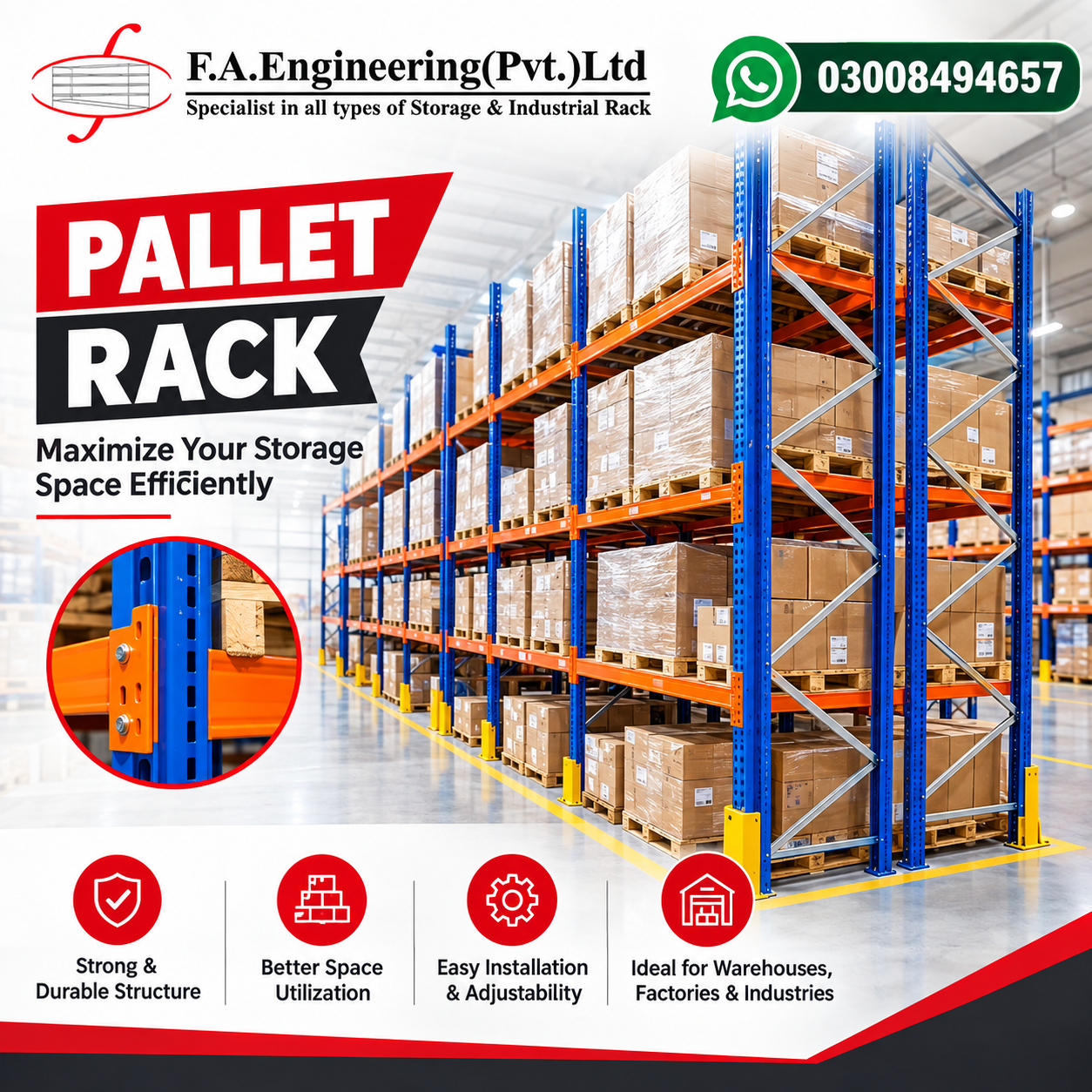
Pallet storage systems are industrial racking structures designed to store goods placed on pallets. These systems allow businesses to organize inventory vertically instead of relying entirely on floor storage.
Products can be stored on multiple rack levels, helping warehouses use their available height more effectively. Depending on the design, forklifts or other material-handling equipment can access pallets for loading, unloading, and stock movement.
Pallet racking is commonly used in manufacturing plants, distribution centers, retail warehouses, food storage facilities, and logistics operations.
Types of Pallet Storage Systems
Different warehouses have different storage requirements. The best pallet racking system depends on available space, inventory volume, product characteristics, and the frequency of stock movement.
1. Selective Pallet Racking
Selective pallet racking is one of the most common warehouse storage solutions. It provides direct access to individual pallets, making it suitable for businesses that store many different products.
Key benefits:
- Direct access to individual pallets
- Convenient stock rotation and inventory management
- Flexible configurations for different product sizes
- Suitable for warehouses with diverse inventory
This system is particularly useful when quick access to products is a priority.
2. Drive-In Pallet Racking
Drive-in racking is designed to increase storage density by allowing forklifts to enter dedicated rack lanes. It reduces the number of aisles needed compared with conventional selective racking.
This system can work well for businesses storing large quantities of similar products. However, inventory arrangement and access planning are important because pallet retrieval is generally less flexible.
3. Double-Deep Pallet Racking
Double-deep racking stores pallets two positions deep, reducing the number of aisles required and increasing storage capacity.
Specialized handling equipment may be needed to access the rear pallets. Businesses should consider equipment compatibility and inventory rotation requirements before selecting this system.
4. Push-Back Pallet Racking
Push-back racking uses carts or similar mechanisms to store multiple pallets deep within a lane. When a new pallet is loaded, existing pallets move backward along the system.
It can provide higher storage density than selective racking while allowing access from the loading face. The appropriate design depends on the type of goods, required stock rotation, and operational workflow.
5. Pallet Flow Racking
Pallet flow systems use inclined roller tracks to move pallets from the loading side toward the picking side. Gravity assists pallet movement.
These systems may be suitable for high-volume operations that require organized stock rotation, including first-in, first-out (FIFO) workflows. Proper engineering, maintenance, and load specifications are essential for safe operation.
Benefits of Pallet Racking Systems
Better Use of Warehouse Space
Pallet racks help businesses use vertical storage space, potentially increasing storage capacity without expanding the warehouse building.
A well-planned layout considers ceiling height, aisle widths, pallet dimensions, and equipment requirements.
Improved Inventory Organization
Clearly arranged pallet positions make it easier to identify product locations, monitor stock levels, and manage inventory movement.
Businesses can also combine rack labeling with warehouse management software to improve stock accuracy.
Faster Material Handling
A suitable racking layout can reduce unnecessary product movement and help employees locate, retrieve, and replenish inventory more efficiently.
The actual improvement depends on warehouse design, staff procedures, and the material-handling equipment in use.
Better Workplace Safety
Properly designed and installed pallet racks support organized storage and help reduce unsafe floor stacking. However, safety also depends on correct loading, regular inspections, trained operators, and protection against forklift impacts.
Rack capacities should be clearly documented, and damaged components should be assessed promptly by qualified personnel.
How to Choose the Right Pallet Racks for Your Warehouse
Before purchasing a pallet storage system, evaluate the following factors.
1. Understand Your Inventory
Determine the dimensions, weight, and quantity of the pallets you intend to store. Consider whether your inventory consists of a few high-volume products or many different stock-keeping units.
These details help determine the most suitable racking configuration.
2. Measure the Available Space
Review the warehouse’s floor area, ceiling height, columns, doors, lighting, and sprinkler systems. Plan sufficient space for forklifts, pedestrian routes, and emergency access.
A professional layout assessment can help identify opportunities to improve storage density without compromising safe movement.
3. Check Load Capacity
Each rack configuration must be designed for its intended loads. Pallet weight, beam capacity, upright capacity, rack height, and configuration all affect safe loading limits.
Request documented specifications from the manufacturer, and never exceed the stated load capacities.
4. Consider Inventory Rotation
Businesses with frequent picking and many product varieties may benefit from selective racking. Operations handling large quantities of similar products may be able to use higher-density systems.
Choose a design that matches your inventory rotation requirements and daily order-picking process.
5. Compare Quality and Pricing
Compare suppliers based on material specifications, fabrication quality, finish, design, delivery, installation, and after-sales support.
A detailed quotation should identify the rack dimensions, quantities, load ratings, accessories, and installation requirements. Avoid choosing a system based on price alone.
Pallet Racks in Faisalabad: What Businesses Should Consider
Faisalabad is an important industrial and commercial center, with businesses involved in textiles, manufacturing, wholesale distribution, and other sectors that may require organized warehouse storage.
Companies searching for pallet racks in Faisalabad should evaluate their inventory requirements, available warehouse space, and material-handling equipment before selecting a supplier.
For textile warehouses, manufacturers, distributors, and wholesale businesses, the right storage layout can help organize finished products, packaging materials, raw materials, and palletized stock.
When comparing suppliers, ask about customization, delivery arrangements, installation support, load specifications, and future expansion options. Confirm that the proposed design suits your actual warehouse conditions.
Businesses may also explore different warehouse racks in Pakistan to compare storage configurations for their operational needs.
Maintenance Tips for Pallet Storage Systems
Regular maintenance helps keep warehouse storage systems in suitable working condition.
Follow these practices:
- Inspect racks regularly for visible damage, bending, corrosion, and loose or missing components.
- Keep rack load limits visible and follow the manufacturer’s loading instructions.
- Train forklift operators to avoid impacts with rack uprights.
- Keep aisles and emergency access routes clear.
- Report damaged components and arrange assessment by qualified professionals.
- Avoid unauthorized modifications to rack structures.
Inspection frequency should reflect the operating environment, equipment traffic, manufacturer guidance, and applicable safety requirements.
Conclusion
Pallet storage systems are an important part of efficient warehouse management. By using vertical space, organizing inventory, and supporting material handling, the right racking solution can help businesses improve storage operations.
Before investing in pallet racks, assess your inventory, warehouse dimensions, load requirements, stock rotation, and budget. Compare qualified suppliers and request a properly designed system with clear specifications and installation guidance.
Whether you need selective pallet racks, drive-in systems, or higher-density storage solutions, careful planning can help you choose a system that supports your warehouse’s current needs and future growth.
For additional information about storage rack options, visit Racks in Lahore and explore solutions suitable for commercial and industrial storage requirements.